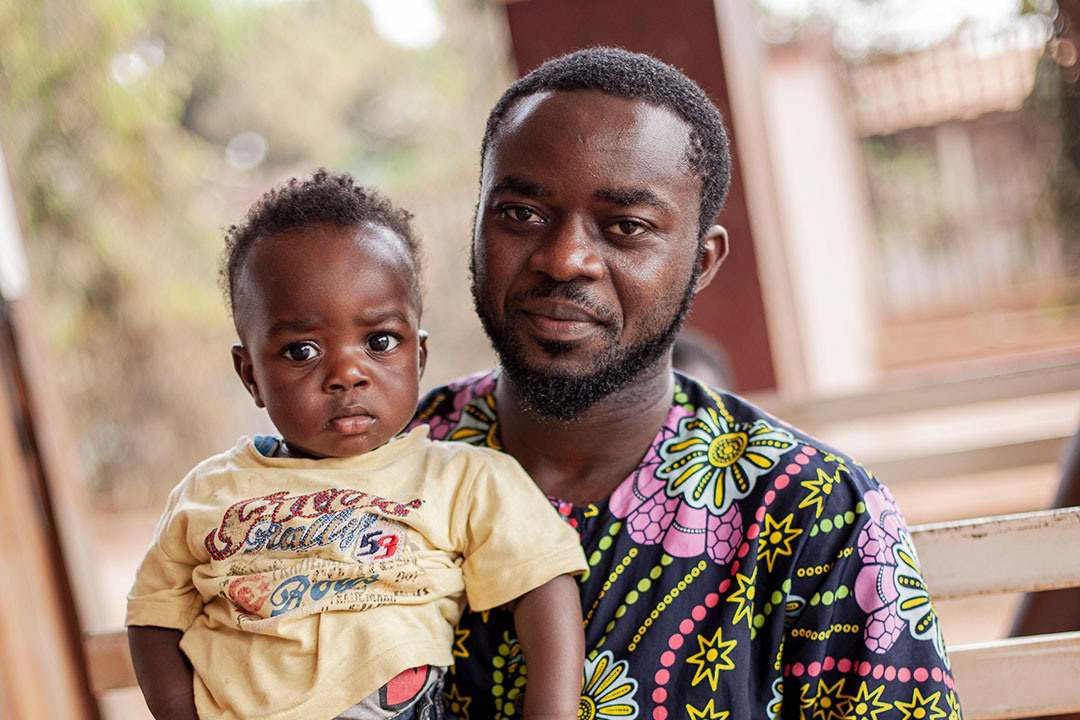
A malaria vaccine can only change a child’s future if it reaches them. Since roll-out began in 2024, the demand for malaria vaccines has exceeded initial forecasts, putting pressure on both supply and affordability. Meeting that demand is therefore not simply about producing more doses, but about building a market that can supply vaccines sustainably and affordably at scale.
A new agreement enabled through the International Finance Facility for Immunisation (IFFIm) is set to help on both fronts. It will lower the negotiated price of RTS,S/AS01, one of two malaria vaccines recommended by the World Health Organization (WHO), while supporting a broader shift towards greater manufacturing capacity and more reliable supply, as demand continues to grow.
A new step in malaria vaccine affordability
For twenty years, IFFIm has been built around a simple idea: when funding arrives can be as important as how much funding is available. By bringing future donor commitments forward, IFFIm is helping Gavi, the Vaccine Alliance and UNICEF secure a new agreement for RTS,S/AS01 at around 40% below the current price. The agreement is expected to generate around US$ 50 million in savings over three years and help protect up to one million additional children by the end of the decade.
This follows an earlier IFFIm-supported transaction for R21/Matrix-M™, the only other malaria vaccine prequalified by WHO. That transaction showed how bringing funding forward could help improve affordability while supporting a more competitive malaria vaccine market. In 2025, an advance payment made through IFFIm for this transaction helped unlock approximately US$ 90 million in savings through 2030.
Together, the agreements point to a broader opportunity: using finance not only to purchase vaccines, but to help create better conditions for access across the market.
An Vermeersch, Gavi’s Chief Vaccine Programmes & Markets Officer, says: “Today’s announcement is a powerful example of what the Vaccine Alliance does best: bringing together financing, technical expertise and strategic partnerships to shape healthier vaccine markets and expand access for the children who need vaccines most.”
Supporting investments in future supply
For malaria vaccines, earlier access to funding can help Gavi and UNICEF make advance commitments, giving manufacturers a clearer visibility of future demand. That visibility can provide greater confidence to invest in production capacity, helping strengthen future supply.
At the same time, advance financing can strengthen Gavi and UNICEF’s ability to secure more favourable terms, helping limited resources reach further.
The same financing model also supports Gavi’s wider malaria vaccine portfolio, across which IFFIm has provided US$ 114 million, over 25% of Gavi’s malaria vaccine expenditures across 25 countries.
Strengthening malaria vaccine supply through technology transfer
A more sustainable malaria vaccine market depends not only on lower prices, but on where and how supply is built. For RTS,S/AS01, the transfer of technology to a developing-country vaccine manufacturer is part of that shift.
UNICEF will begin procuring doses once key regulatory and manufacturing milestones are met, including WHO prequalification of a new manufacturing facility, designed to expand supply capacity.
By helping improve affordability and strengthen supply across the malaria vaccine market, both these agreements can support Gavi’s goal of fully vaccinating 50 million more children against malaria by 2030.
The significance therefore extends beyond the price achieved through a single transaction. Earlier, more predictable financing can strengthen competition and improve supply reliability across the malaria vaccine market.
Making limited funding go further
In 2024, an estimated 610,000 people died from malaria, with around 74% of deaths among children under five.
Lower vaccine prices cannot solve that challenge alone. But they can help countries and partners extend protection further with the resources available, while supporting a market capable of sustaining access as demand grows.
Georgina Baker, Chair of the IFFIm Board, said: “Impact is at the heart of IFFIm’s mission. As we mark twenty years of helping expand access to life-saving vaccines, this transaction demonstrates the continued relevance of IFFIm’s model. We were created to accelerate vaccine access, increase availability, and help lower costs so that more children can be protected sooner. By helping secure lower prices for RTS,S malaria vaccines, and working alongside Gavi and UNICEF, we can maximise our collective impact and help ensure that more children are protected from malaria.”
Twenty years after IFFIm was established, a key principle still holds: the timing of funding can shape what it achieves. Bringing future donor commitments forward can mean lower prices, more reliable supply and more children protected.
 The material in this Restricted Access Library is intended to be accessed only by persons with residence within the territory of a Member State of the European Union and is not intended to be viewed by any other persons. The material in this Restricted Access Library is provided by IFFIm for information purposes only and the materials contained herein were accurate only as of their respective dates. Certain information in the materials contained herein is not intended to be, and is not, current. IFFIm accepts no obligation to update any material contained herein.